
Yesterday, news of Bishop Norman Hutchins’ passing spread swiftly across social media, met with a flood of tributes and emotional posts. A beloved songwriter, pastor, and award-winning recording artist, Hutchins devoted his life to ministry through music, preaching, and serving. His songs, including God’s Got a Blessing (With My Name on It), Battlefield, and my favorite, the 1993 classic We Give You Praise from his album Don’t Stop Praying, are woven into the fabric of Black church culture. His legacy is lasting, deeply personal, and felt by many.
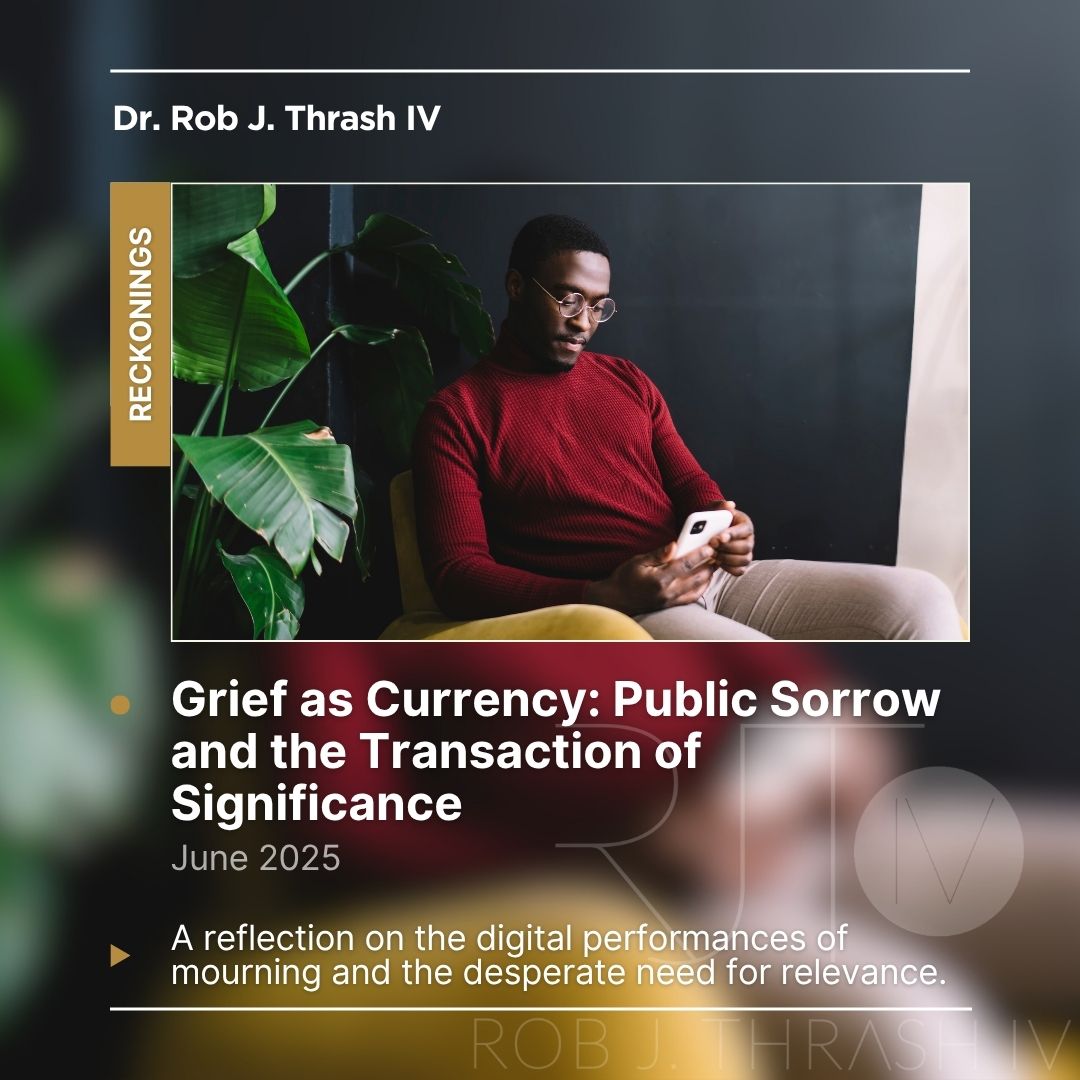
But as news of his passing made its way online, so did something else: a rush and a race. A familiar pattern. Before his family had time to release a statement, before any official word had been offered, timelines lit up with people declaring his death as if it were theirs to announce. Some offered earnest condolences. Others, however, seemed more interested in being first than in being reverent. In that moment, it became clear once again that some have confused mourning with performance and reverence with reach.
There is a particular kind of person who rushes to social media with the speed of a breaking headline the moment a public figure passes. Before the family has spoken. Before the facts have been confirmed. They do not move out of care. They move to be seen. To be significant. To be first.But this is not mourning. This is performance masked as care.
Some may call it grief tourism, a term that gestures toward the hollow display of sorrow for someone with whom one had no real relationship. But this reaches beyond voyeurism. This is about a deep and aching need to matter, so much so that someone else’s final breath becomes a stage for self-importance.
What does it mean to crave the role of town crier at the hour of someone else’s loss? To shout louder than those who are sitting in the wreckage of grief? To post more passionately than the ones who have truly loved and lost? It means the soul is hungry.
In a world where value is too often measured in engagement and reaction, invisibility becomes a quiet crisis. Some confuse being seen with being known. And in the wake of tragedy, they do not know how to hold silence, so they fill it with themselves. They believe that by inserting themselves into death, they can claim some of the intimacy that was never theirs to hold.
Let’s be clear about something: this is not mourning. This is self-promotion dressed in the language of loss.
We must learn to tell the difference between collective grief and performative reach. Black communities, in particular, know what it means to grieve out loud. We sing, we gather, and we testify. We dance between joy and sorrow because we know they live in the same house. But we also know the difference between reverence and spectacle. There are silences too holy for hashtags.
Even if you knew the one who passed, unless you have been asked by the family, by the estate, or by the trusted inner circle to carry the word forward, let your hands rest. Let those who were entrusted with the goodbye be the ones to speak it into the world. Anything else is not just premature; it is a violation.
And we have not yet spoken of those who take it even further: the ones who post vague announcements that they are not okay, that they are stepping away, that they will not be taking calls. As if grief is a spotlight. As if mourning is a way to gather eyes. It is a quiet cry for attention that whispers, “Look at me. Feel for me.” But this moment is not about them. It never was.
What I have seen, what I have continually seen, is that the same individuals return to this behavior every time our community is struck by loss. Critique rolls off of them like water.
Accountability is always deflected. They are not moved by community feedback because the pull to be significant outweighs the call to be respectful. It is as if they cannot help themselves. Perhaps they cannot. But I wonder if they ever consider how they appear to others, how desperate and deeply in need of healing one must be to rob meaningful moments of their dignity.
Because when you center yourself in someone else’s sorrow, you are not grieving. You are grasping. You are attempting to steal connection, belonging, and visibility in a moment that was never yours to claim.
The passing of a person is not a branding opportunity. It is not a caption waiting for your cleverness. It is a pause. A moment for breath. For stillness. For care.
So the next time your fingers tremble to post someone’s passing, pause. Ask yourself: Am I honoring the life or am I inserting myself into a space that does not belong to me?
Let us not be thieves of grief. Let us be stewards of dignity. Let us hold close what sorrow asks of us: silence, presence, and a deep respect for the stories that are not ours to tell.
To the Hutchins family, their church community, and all who have been touched by Bishop Hutchins’ life and now grieve his passing, may peace cover you. May his ministry continue to echo through the lives he healed, the songs he wrote, and the souls he helped lift toward hope.
